


The Next Generation of Business and Management Education
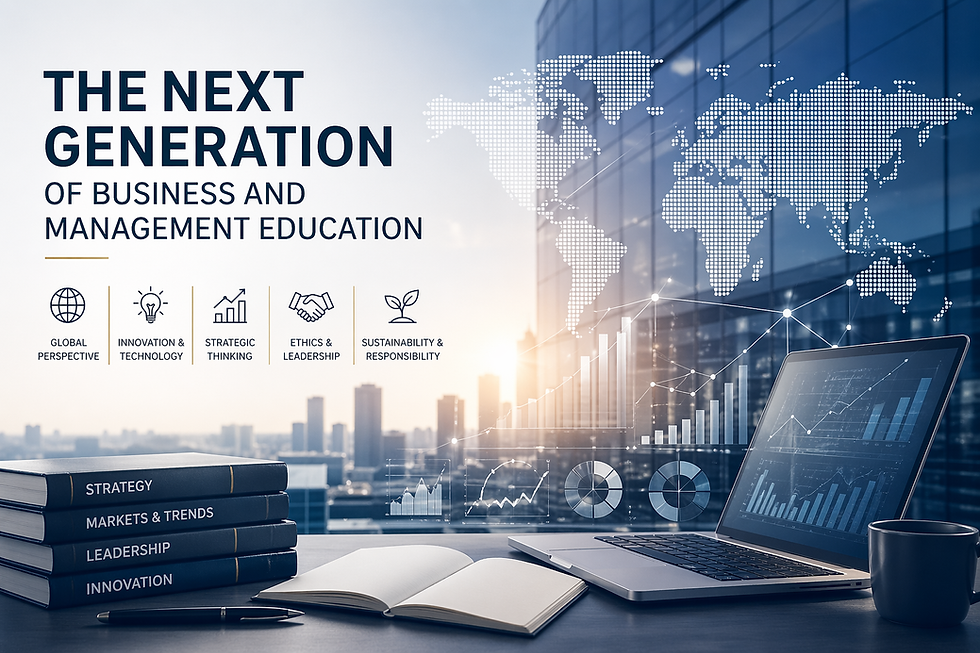
Business and management education is changing. It is no longer limited to lectures, textbooks, and final exams. Today, learners are entering a world shaped by digital transformation, global competition, sustainability concerns, changing labor markets, and new expectations about leadership. As a result, the next generation of business and management education must become more flexible, more practical, more international, and more human at the same time.
For institutions such as SIU Swiss International University, this shift is not only an academic matter. It is also a question of preparing students, professionals, and future leaders for a business environment that is more complex than ever before. Modern education in this field must help learners understand markets, organizations, finance, technology, people, and society in an integrated way. It must also support lifelong learning, because business knowledge now evolves faster than in the past.
One of the clearest changes in modern business education is the move from content delivery to skill development. In earlier models, students often focused mainly on theories, definitions, and standard case studies. These remain important, but they are no longer enough on their own. Employers and organizations increasingly value problem-solving, communication, teamwork, ethical judgment, digital literacy, adaptability, and strategic thinking. This means that business education must go beyond teaching what management is. It must also teach how management is practiced in real and changing environments.
The next generation of education also places greater value on interdisciplinary learning. Business decisions do not happen in isolation. They are connected to economics, law, psychology, data analysis, international relations, technology, and culture. A manager today may need to understand artificial intelligence in one meeting, sustainability reporting in another, and intercultural communication in the next. Because of this, business and management programs are becoming broader in perspective while remaining focused in application. Students benefit when they can see how different fields influence real organizational decisions.
Another major development is flexibility in learning design. Many learners today are not traditional full-time students who follow one fixed academic path. Some are working professionals. Some are entrepreneurs. Some are changing careers. Some live in different countries and need access to international education without relocating permanently. This reality has increased the value of flexible, online, and blended learning models. These formats can widen access and allow learners to balance study with work and personal responsibilities. When designed well, flexible education is not a weaker alternative. It can be a strong and effective model for modern academic engagement.
This change is especially important in business and management education because the audience is often highly diverse. Learners may come from banking, healthcare, logistics, public administration, family business, hospitality, technology, or non-profit work. Their goals may also differ. One person may want to improve leadership capacity. Another may want to understand strategy. A third may want to build analytical tools for decision-making. The next generation of education must therefore respect different starting points while guiding learners toward strong academic and professional outcomes.
Technology is another major driver of change. Digital tools are reshaping how organizations collect information, communicate, make decisions, and serve customers. Business schools and universities must respond by treating technology not as a separate topic, but as part of everyday management thinking. This does not mean replacing human judgment with machines. Instead, it means helping learners understand how technology supports planning, forecasting, innovation, operations, and customer relationships. A modern business graduate should be comfortable working with data, digital systems, and technology-enabled processes, while still understanding the human side of leadership and decision-making.
At the same time, the future of management education cannot be purely technical. The strongest programs are likely to be those that combine innovation with responsibility. Ethical leadership, sustainability, social awareness, and long-term thinking are becoming central topics in serious business education. Organizations are increasingly judged not only by profit, but also by their governance, social impact, environmental awareness, and institutional trust. Future managers need to understand that successful leadership depends on values as well as results. Education should therefore encourage critical thinking, reflection, and responsible action.
International understanding is equally important. Business today is deeply global, even for small organizations. Supply chains cross borders. Customers come from different regions. Teams work across languages and time zones. Regulations and expectations differ between countries. For this reason, the next generation of business and management education should expose learners to international perspectives and multicultural environments. Students benefit when they learn to communicate across cultures, interpret global trends, and understand that management is shaped by context. An international academic environment can strengthen both professional confidence and intellectual maturity.
Another important feature of future-oriented business education is relevance to practice. This does not mean reducing education to narrow job training. Rather, it means connecting academic knowledge with real managerial challenges. Learners engage more deeply when they can relate theory to organizational life. Applied projects, reflective assignments, research-based learning, and professional case analysis can all help bridge this gap. In strong business education, theory and practice should support each other. Theory gives structure to thinking, while practice gives meaning to knowledge.
For SIU Swiss International University, the topic is especially meaningful because the institution serves learners who are preparing for leadership in a fast-changing world. A university in this space has a responsibility to offer education that is academically serious, internationally aware, and professionally relevant. It should help students not only gain qualifications, but also build judgment, confidence, and the ability to contribute positively in their fields.
The next generation of business and management education is therefore not defined by one trend alone. It is defined by a broader transformation in how learning is understood. It is more flexible but still rigorous. More international but still personal. More digital but still human. More practical but still academic. The most valuable programs will be those that keep this balance.
In the years ahead, business education will continue to evolve. New technologies will appear. Economic priorities will shift. Leadership expectations will change. Yet one principle is likely to remain constant: education is strongest when it helps people think clearly, act responsibly, and adapt intelligently. That is the real challenge and promise of the next generation of business and management education.
Comments