


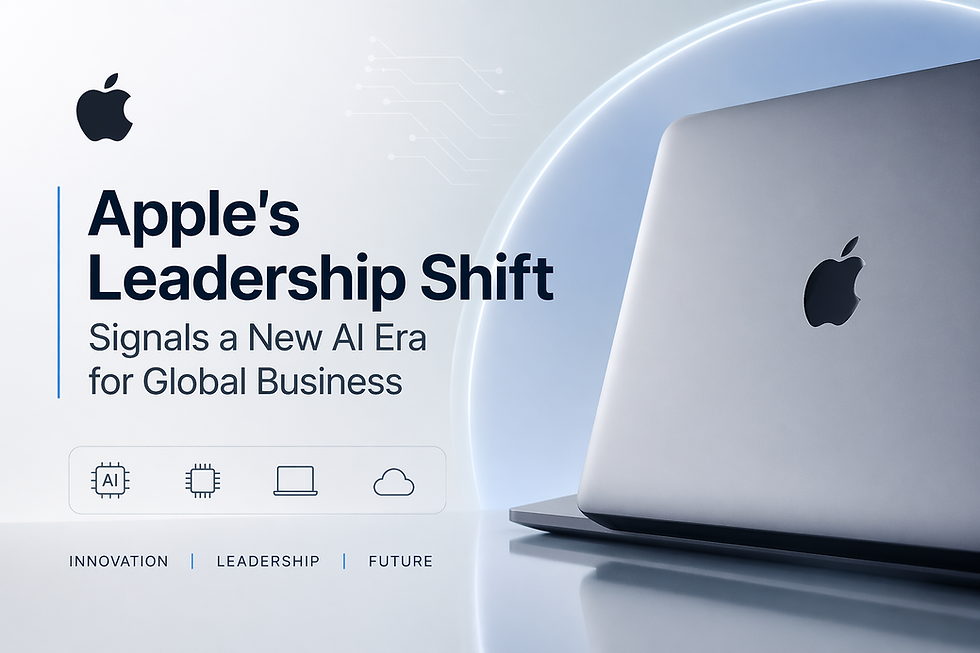
Apple’s Leadership Shift Signals a New AI Era for Global Business
One of the clearest business stories of the day is Apple’s decision to hand leadership from Tim Cook to John Ternus, with the transition set for September 1, 2026. Cook will remain executive chairman, while Ternus, a long-time hardware leader, takes over at a moment when artificial intelligence is reshaping competition across the global technology sector.
This is not only a company story. It is a leadership lesson for students, managers, and institutions everywhere. For many years, large technology firms were judged mainly by scale, efficiency, and product ecosystems. Now they are increasingly judged by how well they can connect innovation, AI strategy, and trust. Apple’s transition shows that even the world’s biggest companies must adapt their leadership model when a new technological cycle begins.
The choice of Ternus is especially meaningful because it suggests a stronger focus on product engineering in the AI age. Hardware, software, chips, and intelligent services are no longer separate conversations. They are becoming one strategic system. That matters for higher education as well. At Swiss International University (SIU), this global shift highlights why future graduates need not only technical literacy, but also strategic thinking, adaptability, and an understanding of how innovation changes organizations. This is the broader meaning of today’s news: leadership in 2026 is increasingly about guiding transformation, not just managing success.
Comments