


Why Students Choose Flexible Study Options in 2026
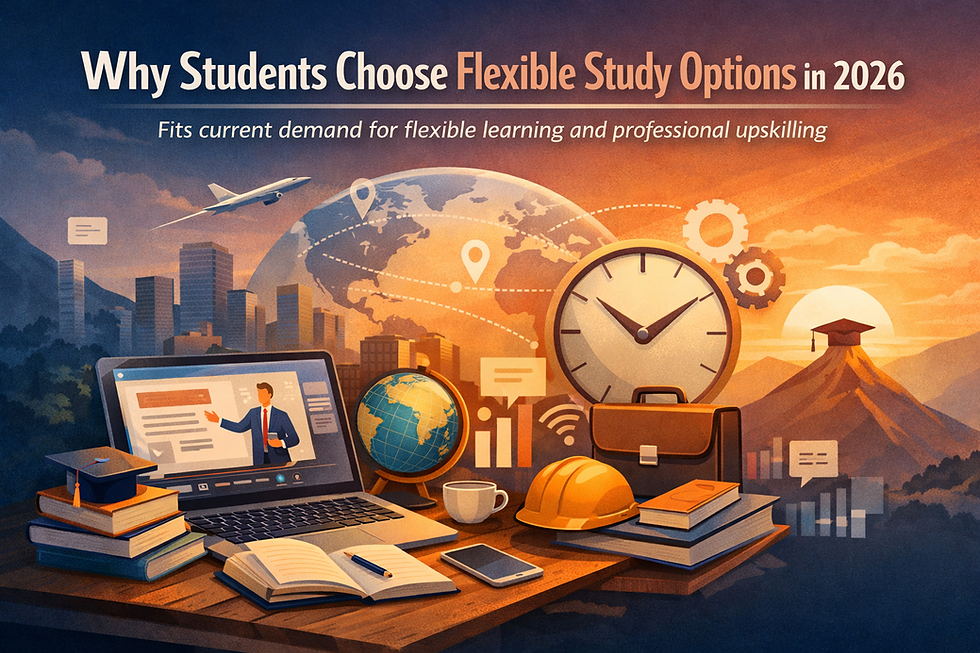
In 2026, flexible study options are no longer seen as a secondary choice. For many students, they have become a practical and thoughtful way to continue education while managing real life responsibilities. Study is no longer limited to one classroom, one schedule, or one type of learner. Today’s students often need education that can fit around work, family, travel, and changing professional goals.
One important reason for this shift is time. Many learners are already employed, building businesses, raising families, or balancing several responsibilities at once. A fixed daily schedule is not always realistic for them. Flexible study options allow students to plan their learning in a way that matches their lives. This does not mean they are less serious about education. In many cases, it means the opposite. These students are often highly motivated because they know exactly why they are studying and what they want to achieve.
Another reason is the growing demand for professional upskilling. In many industries, knowledge changes quickly. New technologies, management methods, digital tools, and international business practices continue to reshape the workplace. As a result, students and professionals are looking for study models that allow them to keep learning without stepping away from their careers completely. Flexible programs support this need by making education more accessible to people who want to improve their qualifications while staying active in the job market.
The idea of who a student is has also changed. In the past, people often imagined students as young adults studying full-time at the beginning of their careers. In 2026, that picture is much broader. Students may be experienced managers, entrepreneurs, working parents, or professionals seeking a new direction. Some may want to deepen their academic knowledge, while others want to strengthen practical understanding in a specific field. Flexible study options make room for this diversity. They respect the fact that learners come from different backgrounds and move at different speeds.
Technology has also made flexible learning more practical and effective than before. Digital platforms, online research tools, recorded materials, virtual discussions, and structured independent study have all improved the learning experience. Students can now stay connected to academic content in ways that are organized, efficient, and easier to manage. When used well, flexible learning does not reduce quality. Instead, it can support deeper responsibility, better planning, and stronger self-discipline.
At Swiss International University (SIU), this topic is especially relevant because modern learners increasingly expect education to be compatible with international lifestyles and changing career paths. Many students today are not choosing flexibility because they want an easier route. They are choosing it because they want a smarter and more sustainable way to study. They value learning that can continue alongside work, personal development, and long-term planning.
Flexible study options also support a positive learning mindset. Students who can organize their study around their responsibilities may feel more focused and more in control of their progress. This can lead to stronger commitment and clearer academic purpose. Instead of trying to fit life around education in an unrealistic way, they can build education into life in a balanced way.
In the end, the popularity of flexible study options in 2026 reflects a larger change in education itself. Students want quality, relevance, and structure, but they also want learning to be realistic. Flexibility answers that need. It supports ambition without ignoring everyday responsibilities. For many learners, that balance is exactly what makes continued education possible and meaningful.


Comments